Summer fly protection for horses
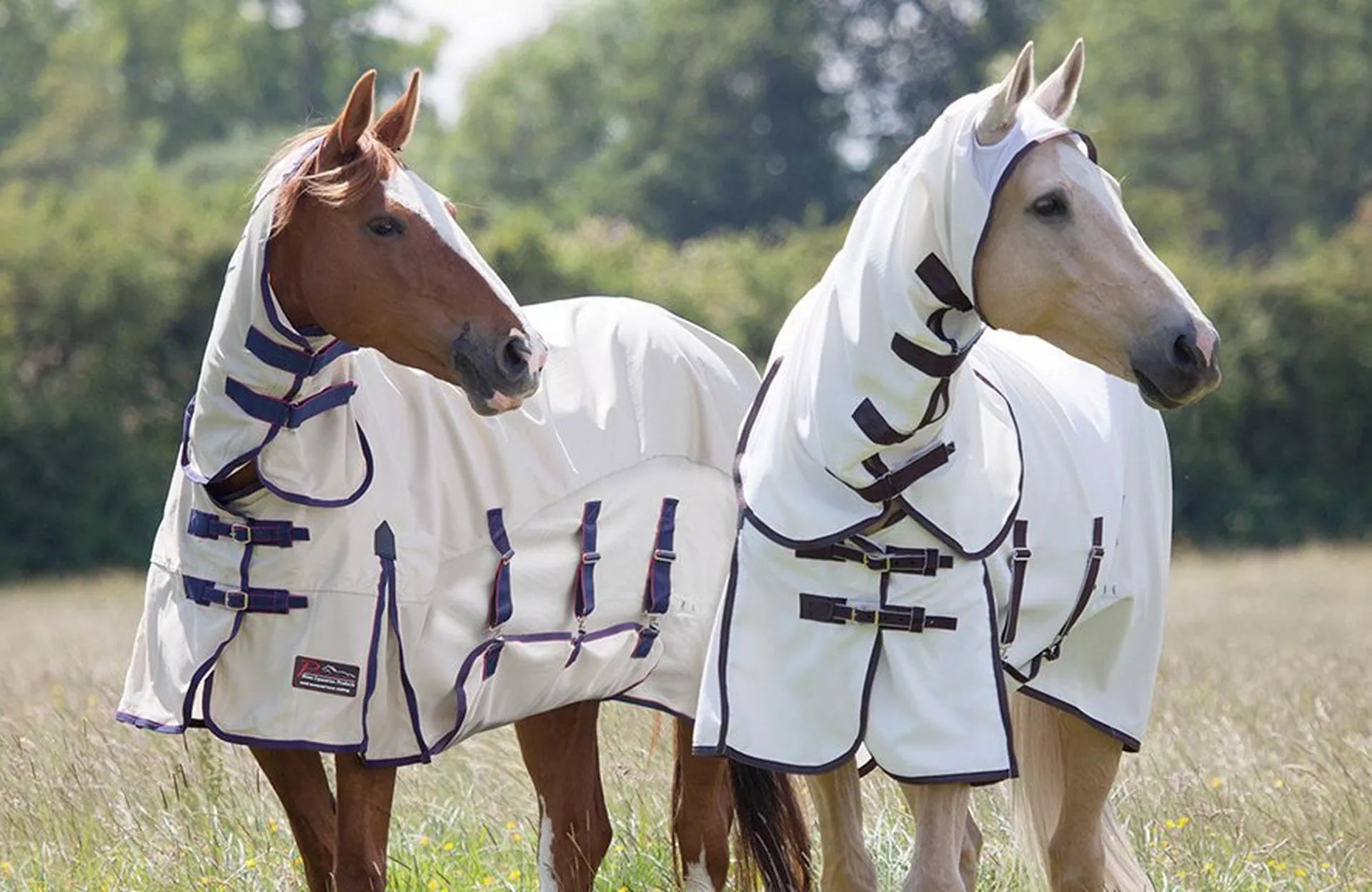
As much as horse owners look forward to the summer months with their longer days and fairer weather, there is no escaping the flies! Flies are everywhere during the summer months and are a real annoyance to both horse and rider. Here at Naylors, we have some top tips to make your summer as fly-free and enjoyable as possible.
Why should you protect your horse?
Flies are not just an annoyance to horses; they can cause great distress and transmit disease and infections. Horses have natural defences against the flies, but sometimes these just aren't enough. In the wild, horses roam for miles and miles and have access to natural forms of shelter, but in domestic situations, this just is not possible. Horses are often restricted to smaller fields and paddocks, often with limited natural shelter and unavoidable fly “hot spots” so it is necessary to help your horse win the battle against flies during the warmer months. In the wild, horses would have a long mane and tail to help protect against flies, but in a domestic environment, manes and tails are often pulled, trimmed or hogged and so offer limited protection.
Flies are renowned for transmitting disease and, although dangerous diseases like African Horse Sickness and Equine Infectious Anaemia are uncommon in the UK, some infections can easily be transmitted throughout a herd, particularly eye infections.
When should you protect your horse?
Flies are most prevalent during the warmer summer months, particularly April-September. Flies can be worse in certain areas, like near stagnant/still water, woodland, marshland and near muck heaps, so try to avoid these areas if possible or take the necessary precautions for you and your horse. Flies like midges and black flies are particularly active at dawn and dusk, whereas horseflies are more active during the heat of the day.
Prevention
There are several steps you can take to help your horse during the fly season.
- Stable your horse during the hottest part of the day, which will offer relief from both the heat and annoying biting insects and flies.
- Avoid riding at the hottest part of the day. Flies are attracted to warm, sweaty bodies, so you and your horse are likely to be plagued! Try riding in the morning or evening when it is cooler to avoid your horse sweating too much.
- Wash off any sweat after a ride. A no-rinse wash is ideal for those looking for a quick and easy way to refresh their horse after a workout without the need to rinse off.
- Keep a clean environment so as not to attract flies, keep stables clean and free from droppings, keep feed buckets clean, regularly change water buckets to keep water fresh, and pick fields, etc.
Protection on the outside
Fly Repellents
There are hundreds of lotions, potions, sprays and gels that can help deter flies and here at Naylors, we have a wide range of your favourite brands. We have a range of both natural-based and synthetic-based fly repellents.

Natural fly repellents do not contain any chemicals and are great for horses with sensitive skin or for owners who do not wish to use chemicals on their horse. Natural fly repellents often use blends of essential oils like citronella, eucalyptus and lemongrass, which are known for their repelling qualities. Barrier Super Plus Fly Repellent offers a 100% natural formula that deters all flying insects, and the soothing formula helps to calm the irritation of fly bites.

Synthetic fly repellents contain chemical fly repellents that have been extensively tested in their effectiveness against flies and biting insects. DEET and PMD are the most commonly used chemicals. DEET was developed by the US Army and was used during jungle warfare to help combat exotic biting insects. DEET is widely used as an insect repellent and can offer relief for up to 8 hours. PMD is found in the essential oil from the leaves of Eucalyptus citriodora and is refined for its use in insect repellents. Leovet Power Phaser Repellent is a strong formula that offers up to 7 hours of effectiveness. Power Phaser offers an optimised blend of active ingredients, including DEET and IR3535.
Fly Rugs

There is a wide range of fly rugs available, so you are sure to find something to suit your horse. A basic fly sheet is usually made from a soft mesh and covers the horse from the top of the neck to the tail. Some fly sheets can have the added extra of a belly flap, an oversized tail flap or a hood with ear holes for increased protection.
Combination Rugs
A combination fly rug is a worthwhile investment, particularly with the unpredictable British weather. Combination fly rugs offer a waterproof rug with a fly sheet, meaning your horse is protected from summer showers whilst keeping cool and fly-free.
The Shires Tempest Original Combo Waterproof Fly Rug is ideal for those looking to protect their horse from flies while staying prepared for changeable summer weather. This rug combines waterproof protection across the back with breathable mesh panels to keep horses dry, cool and fly‑free.

Sweet Itch Rugs

Sweet Itch rugs offer a higher level of protection against flies and biting insects than most standard fly rugs and are highly recommended for horses and ponies that suffer from sweet itch. Most sweet itch rugs and hoodies offer a hood with ear holes for maximum top-to-tail protection. As midges attack the mane and tail areas, it is important to ensure these areas are fully protected, so hoods and extended tail flaps are key features to look out for. Sweet Itch rugs are often made from a denser, tougher fabric to ensure no flies or biting insects can penetrate and also to withstand horses attempting to rub on fences and trees.
UV Protection Rugs

UV protection rugs are dual-purpose rugs that protect the horse from UV rays as well as flies. UV rugs can help keep your horse cooler through the summer months as they reflect the heat of the sun, and they can also help prevent bleaching of coats on darker coloured horses. The Weatherbeeta ComFiTec Tyro Fly Sheet Combo has built in UV protection.
Fly Masks & Fringes

Fly masks and fringes may look space age and a little silly to us, but they can help protect horses' delicate facial areas from fly attack. Fly masks are usually made from a soft mesh and fit over the horse's head to protect the eyes, ears and nose. Fly masks are available in a variety of different styles, including those with or without ear protection and those with or without nose protection. Fly masks with ear protection will help protect your horse against black flies that like to bite and feed inside the ears, and those with nose protection can help protect against sunburn on sensitive pink noses.

Some horses will not tolerate a mask on their face, but can still suffer from sore and weepy eyes due to the flies. In this case, it may be worth using a fly fringe. Fly fringes can be easily attached to a headcollar or bridle. Fly fringes have long tassels that extend down the horse's face and sway with movement to deter flies from landing on the face.
Protection from the Inside

Several supplements can be fed to help your horse battle flies this summer. Garlic, Cider Vinegar and Brewer's Yeast are common herbal supplements that can be added to your horse's diet. Garlic is a popular herbal additive fed by many horse owners and is well known for its fly-repelling qualities; garlic is excreted through the skin when a horse sweats and acts as a deterrent to flies. Cider vinegar and Brewer's Yeast have numerous health benefits, but are known to make your horse less attractive and tasty to biting flies.
Which pesky flies?
We use the term flies loosely, but which flies actually cause so much trouble in the summer months?

Photo by Lewis Meyers on Unsplash
Horseflies (Tabanidae) are large, robust and persistent flies with a painful bite that forms into a pimple (papule) or a small lump (wheal) with a central ulcer. Horseflies are agile, fast and persistent attackers that will not be deterred by swatting away and will often chase their intended target for a short period of time. Female Horseflies need blood to reproduce, and their bite is painful as they slice the skin with razor-sharp mandibles to access blood. Horseflies are found around wet ground, moorland, woodland and areas with livestock and attack the underside, neck, legs and withers of the horse. Horseflies are most active during the hottest part of the day and are most prevalent in June and July.
How to protect against Horseflies - Horseflies do not like dark areas, so bringing a horse into a stable during the hottest part of the day will offer relief. As Horseflies are robust creatures, homemade repellents have little benefit. A physical barrier like a fly sheet is the best defence against horseflies, and synthetic insecticides like Permethrin and DEET can be beneficial.
Black Flies (Simuliidae) are small flies that feed around the face, ears, neck and underside of horses. Black flies have a painful bite that forms into a lump with a scab. Black flies are most active around dawn and dusk in spring and early summer and breed in rapidly moving water.
How to protect against Black flies – physical barriers like a fly sheet, fly mask, and ear mask can prevent flies from landing. Fly repellents can be useful, and oil-based products will discourage flies from landing. Petroleum jelly in vulnerable areas like the belly and ears may help stop biting.
Midges (Culicoides) are small flies that feed on blood from different areas of the horse, depending on the species. Midges are active at dusk, dawn and on overcast days. Midges dislike bright sunshine and can only fly relatively short distances in calm or still air. Midges are prevalent in wet, boggy conditions and near still or stagnant water, so avoid grazing in these areas. Some horses are allergic to the saliva released by midges when feeding, which causes the condition, Sweet Itch.
How to protect against midges – physical barriers like a fly sheet, fly mask, and ear mask will prevent midges from landing. For horses suffering from Sweet Itch, a special Sweet Itch rug or hoody should be used for maximum protection. Repellents can be effective against midges, particularly Permethrin-based products. An oil-based repellent can help prevent midges from landing on the horse.
Stable flies (Stomoxys calcitrans) are small flies similar to the common house fly that feed on blood. Stable Flies are prevalent in dirty environments and around where cattle and horses are kept. Stable Flies lay their eggs in moist, rotting vegetation, including hay, silage and muck heaps. Stable flies attack the legs and underside of horses, and their bites appear as itchy and painful lumps or pimples with a central crust.
How to protect against Stable flies – Good hygiene is key; ensure stables, yards and barns are kept clean and free from droppings and dirty, rotting bedding. A physical barrier of a fly sheet will help prevent bites, and both natural and synthetic repellents may be beneficial.
How to treat fly bites
Bathing with cool salt water can help relieve bites, or washing the horse in a soothing shampoo like Gallop Medicated Shampoo or Tea Tree Shampoo may also help. Anti-itch solutions can help calm the irritated skin and prevent itching or rubbing. Leovet No Rub, Carr & Day & Martin Killitch Lotion can help soothe irritated skin and may be beneficial to Sweet Itch sufferers and those who rub excessively. Topical creams and lotions can also help in the treatment of bites; Aloe Vera Gel is well known for its soothing properties, and MSM Cream is a general cream that soothes minor skin conditions.

Here's to a fly-free summer
Flies are an unavoidable pest during the summer months but hopefully our advice and tips will help make your summer as fly free and enjoyable as possible.
Do you have any top tips for protecting your horse from the onslaught of flies during the summer months. What fly protection for horses can you recommend?